The Nuer of South Sudan and Ethiopia
Population: 840,000 Sudan (estimate from various sources); 64,900 Ethiopia (1994 census)
Religion:
Monotheistic Animism 99%; Christianity: 1% (Evangelical)
Registry of Peoples code: Naath 106990
Registry of Language code (Ethnologue): Nuer nus
NARRATIVE PROFILE
Location:
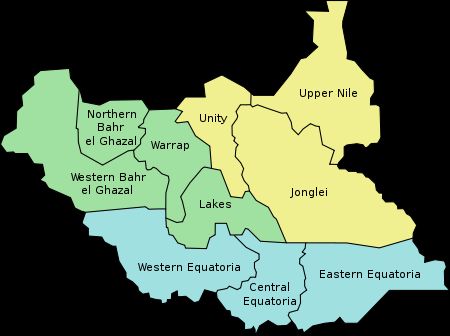
The Nuer live mostly in Southern Sudan, in the east Upper Nile Province around the junction of the Nile River with the Bahr el Ghazal and Sobat Rivers, and extending up the Sobat across the Ethiopian border. The Center of the Nuer area is around Lake No.
History:
Archeologists indicate that the introduction of cattle in this area is related to the development of the distinct peoples the Nuer are descended from. Oral traditions indicate that the Nuer have moved east of the Nile River only during the last 200 years.
They began an especially active migration about the mid 1800s. As they moved gradually east, they pushed the Anuak farther east into Ethiopia. During this period many Dinka people were incorporated into the Nuer community. Atuot and Nuer traditions indicate origins with the Dinka in what is now known as Western Nuerland. These traditions say the separation of the three occurred due to a dispute over cattle ownership.
Identity:
Like many of his pastoral neighbors, a Nuer man's dearest possession is his cattle. Life depends on cattle and a Nuer will risk his life to defend them or to raid his neighbor's cattle. The Nuer worldview is built around the herds and prestige is measured by the quantity and quality of the cattle a man owns.
Men and women take the names of their favorite oxen or cows and prefer to be greeted by their cattle names. While they do engage in agricultural pursuits, the care of cattle is the only labor they enjoy. It is said that conversation on virtually any subject will inevitably involve a discussion of cattle.
The Nuer, a tall and very dark people, are related to the Dinka, who live to their west, and their culture is very similar. The Nuer call themselves Naath, meaning "human beings." The Nuer, Dinka and Atwot (Atuot) are sometimes considered one ethnic group.
Language:
The Nuer language is a Nilotic language closely related to the speech of the Dinka and Atwot. The language is uniform with no definable dialects.
Political Situation:
The Nuer are organized into what might be called "tribes," which consist of further sub-divisions by lineage. The lineages are a major structural factor for political order. The territorial groupings and lineage groupings are more closely aligned for some purposes than for others. There is no overall political authority in the tribal structure. Political activity involves various grouping or separation of the many territorial and clan sections.
|
British influence, under the "condominium" with Egypt from the turn of the 20th century, caused a major change for the Nuer. British colonial policy was focused on establishing fixed boundaries between the Dinka and the Nuer. This effectively halted a long-term dynamic process of cultural change that had been happening among these peoples for centuries. They have not been active in national politics of the Sudan.
In recent years, there has been extensive military conflict in the South of Sudan, and the Nuer have become more politically active. Some of the leaders of the resistance movements opposing the oppression of the Central Sudanese government in Khartoum have been Nuer, along with the prominent Dinka. On 9 July 2011, following a series of discussions under a cease-fire, sponsored by the United Nations and other agencies, a new independent nation of the Republic of South Sudan was proclaimed.
|
Customs:
Their culture is organized around cattle. But since the Nuer people live in the Upper Nile valley, Nile perch is also an essential part of their economy. Grains and vegetables supplement this diet. None of the food commodities are produced for market purposes. Cattle are not primarily for food, but Neur do drink milk. Meat is eaten at important celebrations when an animal is sacrificed.
The Nuer living pattern changes according to the seasons of the year. As the rivers flood, the people have to move farther lack onto higher ground, where the women cultivate millet and maize while the men herd the cattle nearby. In the dry season, the younger men take the cattle herds closer to the receding rivers. Cooperative extended family groups live around communal cattle camps.
Nuer build only temporary houses or shelters. Houses in wet-season settlements have circular mud walls over stick frames with thatched roofs. As grain is harvested, it is dried on temporary scaffolds. In dry-season camps, men sleep with the cattle in shelters made from local grasses. Women may remain in or near the wet season areas when the men follow the receding waters toward the lower areas.
Parallel to territorial divisions are clan lineages descended through the male line from a single ancestor. These lineages are significant in the control and distribution of resources, and tend to coalesce with the territorial sections. Marriages must be outside one's own clan and are made legal by the payment of cattle by the man's clan to the woman's clan, shared among various persons in the clan.
Marriage takes place in stages, however. A marriage is not finalized until the bride has born at least two children. When a third child is born, the marriage is considered "tied." At this point, the wife and the children become full members of the husband's clan. Women desire to have six children. A man may have multiple wives, who do not necessarily live close to each other. But they will all live in the area of the husband's clan.
The Nuer refer to their cattle according to the coloring and spotting patterns of their coats. There are twelve separate words for the unique pattern groupings commonly referred to. Cattle are owned by the family, herded by men and milked by women but under the control of the head of the household. Most conflicts involve cattle. Fines for offenses are assessed in cattle.
The Nuer are an excitable people and individuals are very independent and prone to take offense. A casual slight may lead to a quarrel or fight. When violence or the threat of violence erupts, age-mates or family leaders are called on to cool things off. In dire circumstances, a special group called the leopard-skin chiefs are invoked.
These special individuals have no formal political authority, but are honored for moral and spiritual authority. The chiefs may even offer sanctuary to murderers. They can then moderate negotiations for compensation, the only alternative to violent clan feuds.
The Nuer, like the Dinka, wear little or no clothing, especially the men. Women will more commonly wear a brief skirt of cloth or skin. Women wear wire and bead necklaces and headdresses. Young men are initiated by circumcision and six cuts across the forehead. A man is named by the coloring of his ritual bull given him at initiation. He composes songs of affection and praise to that bull.
Religion:
Cattle play an important part in Nuer religion and ritual. Cows are dedicated to the spirits of the owner's lineages and any personal spirits that may have possessed them at any time. The Nuer believe they establish contact with these ancestor spirits by rubbing ashes along the backs of oxen or cows dedicated to them, through the sacrifice of cattle. No important Nuer ceremony of any kind is complete without such a sacrifice.
The Nuer have a traditional religious worldview usually called "animistic." But they worship a supreme being called Kwoth (Kuoth) who has various manifestations with which some claim to have personal relationships. The Nuer pray for health and well-being, offering sacrifices to Kwoth so he will answer their petitions. There is no organized religious hierarchy or system, but many individuals serve as diviners and healers.
They do not believe in a place of afterlife for the spirit, and their religious concepts deal with concerns of this life. They do believe the spirits of the dead can affect their current life. The more recently deceased, the more influence they have. The Nuer honor and appease the spirits of their ancestors. Cattle are sacrificed to God and the spirits.
Christianity:
Missionaries began working among the Nuer in the 1940s. Thirty years later, there was a revival among the people and many came to accept Jesus as Savior. Although some of the "decisions" may have been politically motivated, it is clear that there is a well-established Nuer church with about 200 congregations. Even so, reports indicate that only about 1% of the Nuer are Christian.
A history of Nuer linguistic work indicates that the book of Genesis was translated and published in 1954, last edition in 1972. You can view this edition online. The whole New Testament was published in 1968. A new translation that became part of the Nuer Bible in 1999-2000 was published in 1993.
The Ethnologue reports that the Bible was first published in Nuer in 1999, using the current orthography and language. The book of Genesis from the 1999 edition is also viewable online. There are some gospel recordings in Nuer. Nuer access to the gospel had been restricted due to geographical and social factors until the 1990s.
In 1993, the UN High Commission for Refugees reported that 53 million people had been displaced by the civil war in Sudan. Several thousand of these are Nuer. Some who took refuge in Ethiopia were driven back into Sudan, while others found places in refugee camps.
Many Christian organizations from United States (Presbyterian Church of USA and Gospel Recordings), Germany and Sweden (Lutherans) and Ethiopia have faithfully ministered to peoples of the region. Through intermingling, tribes form relationships in which Christians can share Jesus with their traditional neighbors. Groups such as Nuer, known for their resistance to the gospel, have responded to Christ.
Foreigners who would like to work effectively among the Nuer must obviously learn well the language of the Nuer and the life-style pertinent to cattle herding. They will need to give attention to the Nuer cultural worldview before they attempt any serious communication. It has been shown, too, that a great many aspects of the Nuer culture are similar to cultural distinctives of Old Testament peoples.
These similarities include features of their social structure, the kinship reckoning and extended family systems, aspects of marriage and divorce, rites of passage, and even religious concepts of God, man, spirits, sin, and sacrifices.
Related Profiles
Dinka
Fur
For more on Nuer People
Internet
The Development of Nuer Linguistics
Genesis in Nuer – 1954-72 Orthography and Translation
Genesis in Nuer – Current Orthography and Translation
John in Nuer – published in 1968
Nuer – The New World Encyclopedia
Nuer – Saharan Vibe
The Nuer: A Description of the Modes of Livelihood and Political Institutions of a Nilotic People – E E Evans-Pritchard
Nuer Culture and History
Nuer Information
Nuer Language – Ethnologue
The Nuer People – Dual B. Gony, Nuer community scholar
The Nuer Traditional Time: Social life and Culture – The Upper Nile Times
The Perception of Polygamous Marriage in Sudanese society!
Some Features Of Nuer Religion – E E Evans-Pritchard
South Sudan – Wikipedia
"Welcome, South Sudan, to the Family of Nations"
Print
Burton, John W. "Nuer," Encyclopedia of World Cultures. Boston, Massachussetts: G K Hall and Co, Vol IX, 1995.
Carisle, Richard. The Illustrated Encyclopedia of Mankind. NY:
Marshall Cavendish, 1990.
Evans-Pritchard, E E. Kinship and Marriage among the Nuer. Oxford: Claredon Press. 1951.
----. The Nuer. Oxford: Claredon Press. 1940.
----. Nuer Religion. Oxford: Claredon Press. 1956.
Global Prayer Digest. Pasadena, California: Frontier Fellowship, 1991, 1994.
McFall, Ernest A. Approaching the Nuer of Africa Through the Old Testament.
Pasadena, California: William Carey Library, 1970.
Metz, Helen Chapin. Sudan: A Country Study. Washington, DC: Federal Research Division, Library of Congress, 1991.
Orville Boyd Jenkins
Written March 1997, First posted May 2001
Revised 12 June 2008
Last updated 6 August 2011
Copyright © 2001, 2008 Orville Boyd Jenkins
Permission granted for free download and transmission for personal or educational use. Please give credit and link back. Other rights reserved.
Email: researchguy@iname.com

filename: nuer.html